Small home repairs on demand
When household budgets tighten, many people repair instead of replacing. Simple plumbing, carpentry, painting and assembly tend to have steady demand.
A recession isn't declared the day it starts — it's confirmed months later, with data. In the meantime, what determines how a family fares isn't guessing when it will hit, but already having an emergency fund and knowing what order to prioritize payments in if your income stops. Here is what official economic agencies actually say, with no promises and no investment advice.
Updated on September 9, 2026
What a recession technically is. The NBER — the authority that officially dates recessions in the United States — defines it as "a significant decline in economic activity that is spread across the economy and that lasts more than a few months." It uses three criteria: depth, diffusion, and duration, evaluated using six monthly indicators, including real personal income, nonfarm employment, and industrial production.
What inflation officially is. The U.S. Bureau of Labor Statistics (BLS) defines it as "the overall general upward price movement of goods and services in an economy," measured with the Consumer Price Index over a representative basket of goods. It is not that a single product gets more expensive — it is that the general price level rises in a sustained way.
When your income drops, the question is not "how do I spend less" but "what do I pay first." And a warning is in order right away: there is no official mandatory list that ranks your payments. What financial agencies do publish is a criterion, and that is better than a list, because it adapts to your situation.
How much financial fragility there actually is. The Federal Reserve's most recent report on the economic well-being of households (2025 data) found that 12% of adults in the United States could not cover an unexpected $400 expense by any means, and 37% could not cover it using only cash or its equivalent. This is not an exceptional situation: it describes a considerable share of the population, even in a large, developed economy.
About the emergency fund, no magic formulas. The "three to six months of expenses" rule circulates widely, and honesty requires saying that we did not find it stated that way in the CFPB's official guide. What that agency actually says is more useful if you are stretched thin: "the amount you need depends on your situation" and "even a small amount can provide some financial security." Its underlying reasoning: without that cushion, a single unexpected expense "can grow significantly larger than the original bill because of interest and fees," because it forces you into debt. Start with whatever you can, even if it is just one week's worth.
When you lose your job, order matters. The U.S. Consumer Financial Protection Bureau (CFPB) recommends this specific order:
Informal employment, the other side of this kind of crisis in the Americas. According to the ILO, informal employment accounted for 35.4% of total employment in the Americas in 2024, with an enormous gap: 51.7% in Latin America and the Caribbean versus 8.7% in North America. In Brazil, the IBGE recorded an informality rate of 38.1% in 2025 — 13.8 million people without a formal contract. That gap matters because someone working without a contract usually has less access to unemployment insurance and formal credit — exactly what's needed most after losing income.
What it actually is. The Bank of Mexico defines it as "the sustained and widespread increase in the prices of goods and services in an economy over time." The two words that matter are sustained and widespread: tomatoes going up for one week is not inflation; everything going up, month after month, is. That central bank's constitutional mandate is precisely to preserve "the purchasing power of the national currency," which is the technical way of saying your money keeps buying the same amount.
Where things stand. According to ECLAC's Preliminary Overview, using data through November 2025, between February and September 2025 "the region's median inflation fell by roughly half, down to 1.8%," driven by falling international food and energy prices and the normalization of supply chains. Be careful not to misread that number: it is a median across countries, not an average, and not your own country's figure. Always check the number from your own central bank or statistics agency.
Colombia's Banco de la República explains why it happens: "it generally occurs because there is no demand for the local currency, or because demand for foreign currency exceeds its supply." Translated to the kitchen table: it takes more local money to buy the same dollar, and everything that comes from abroad — or is made with inputs from abroad — gets more expensive.
An honest note about what we did not find: we looked for an official standard saying when it makes sense to close instead of taking on more debt, and it does not exist. The SBA documents how to close, not when. That decision is still yours to make, and it is better made with an accountant and your cash flow in front of you, not during a sleepless night.
A family plan is not a pretty document: it is a handful of agreements made today, while everyone is calm, so you do not have to decide with your heart racing and no signal on your phone. It takes one conversation over the table and fits on a sheet of paper stuck to the refrigerator.
The ILO defines multiple job-holding simply: "it occurs when a person works at more than one job at the same time." In Latin America it is a widespread reality, and often it is not ambition, it is arithmetic. The useful question is not whether a second income source makes sense, but which one to pick so it does not consume you.
When household budgets tighten, many people repair instead of replacing. Simple plumbing, carpentry, painting and assembly tend to have steady demand.
When many households are left without a kitchen, without gas or without time, affordable ready meals become a basic neighbourhood service.
When replacing costs too much or stock runs out, fixing the fridge, fan or washing machine makes economic sense again.
Where water is scarce or rationed, harvesting roof rainwater and fixing household leaks cuts the bill month after month. Charged per installation.
Sealing gaps around doors and windows, fitting draught strips and insulating ceilings keeps the heat in and cuts heating costs.
When vegetable prices rise, interest in growing at home grows too. Selling ready seedlings, soil mix and advice costs little and brings repeat demand.
Replacing soaked or lost documents, filling in online forms, scanning and printing. Many people cannot do it alone and are glad to pay for help.
These are possibilities, not guarantees. Results depend on location, demand, competition, capital, skills and each person’s circumstances.
Filter the income possibilities by your situation. Results are starting points to research locally, not personalised advice. What can I do?
In a recession people don't stop spending: they change what they spend on. Aspirational purchases and anything that can be postponed drop first; what holds up is what avoids a bigger expense, what replaces something pricier, and what people need no matter what. That's the compass for deciding what to offer.
It helps to start with one figure to size up what we're talking about: according to the ILO, informality affects nearly half of the employed population of Latin America and the Caribbean, around 47%, with huge differences between countries — under 30% in Uruguay and Chile, over 70% in Bolivia and Peru. For millions of families in the region, "looking for a job" and "starting something on your own" are the same sentence. What follows is not a promise of income: it is a map of what people actually do when a crisis hits, with the requirements and the risks laid out plainly.
A business in a recession is judged on three things: how much you need to start, how long it takes to get paid, and what happens if it doesn't work out. What follows is ordered by increasing investment, and every option can be started while you keep another job.
Recessions end, and it is worth knowing how that end gets declared, so you are not left waiting for an announcement. The NBER, which officially dates business cycles in the United States, marks the end with the trough: the point at which activity "reaches a low point and begins to rise again over a sustained period."
An orientation list to complement the information on this page. This is not a shop, and nothing here is a required purchase.
No products have been selected for this section yet.
Complete PDF guide to print or carry on your phone, with official measures before, during and after, and cited sources.
Hoja de cálculo para ver ingresos, gastos fijos y recortes posibles mes a mes.
Real, published and verifiable cases: each one links to the source where it was documented. No made-up testimonials here.
Luz Myriam Céspedes set up an alterations and sewing workshop in November 2020, in the middle of the crisis. She had to move locations to cut costs and lost her customer base: "I had to start over from zero with customers… weeks would go by without anyone walking in". What changed her business was joining a program that gave her two sewing machines and, above all, connected her as a supplier to three larger companies.
What to learn from this: Selling to the public bit by bit is slow and exhausting. Becoming a supplier to a company that buys regularly changes the scale of the business. Look for local supply-chain programs.
PNUD Colombia · 2023-07-27 · Así fue emprender después de pandemia
Eduardo Crespo watched his consulting firm's sales fall and turned to two public support programs. The recovery wasn't fast: sales started picking up in the second quarter of 2022, almost two years after the hit. In May 2023 he was named his state's small business of the year in the minority-owned category.
What to learn from this: Public credit doesn't speed up sales: it buys time so you don't close while they come back. Plan on that horizon — months, not weeks — and don't measure yourself against an imagined three-month recovery.
SBA — Administración de Pequeños Negocios (EE. UU.) · Hispanic Heritage Month success story
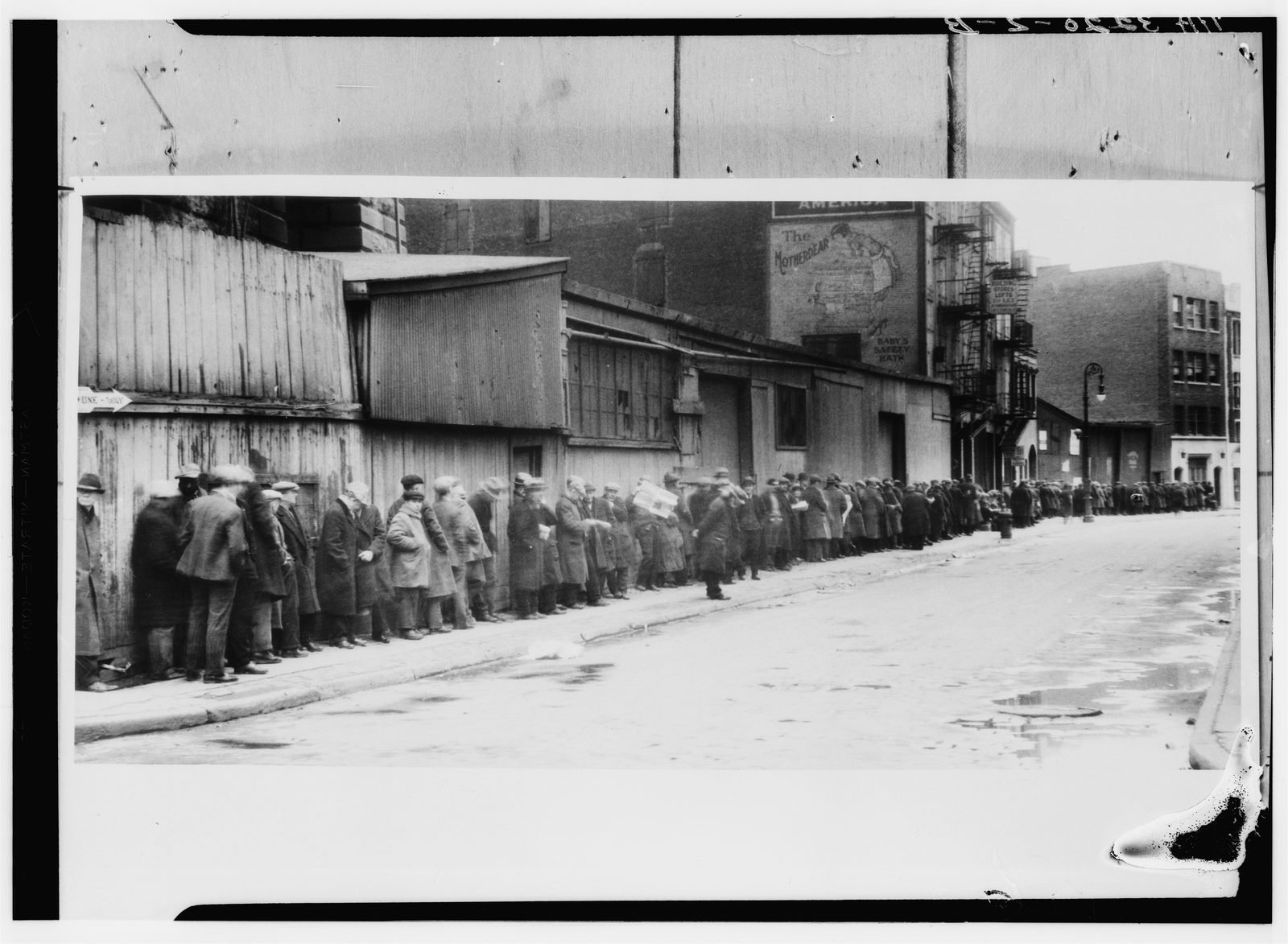
Three American economic crises, and what they left behind.
Related guides on this site:
Download the checklist and build your family plan today. It takes under an hour and it is what changes the outcome most.
This project is kept alive by donations from our visitors. Your support lets us keep creating practical information, tools, manuals, tutorials and free resources to help people and their families prepare for, respond to and recover from different kinds of crises.
The amount shown is updated manually. We do not process payments: donations are made on the external platforms.