Cleanup and mud removal service after a flood
After a flood many homes and shops need mud removed, drying and disinfecting before they can be used again. It is physical work with demand concentrated in the following weeks.
Real crises rarely arrive one at a time. A hurricane cuts the power; without power, water stops being pumped; without water, the public-health crisis gets worse. The agencies that study disasters have a name for this — compound or cascading risk — and a clear conclusion: the combined damage is greater than the sum of each emergency on its own.
Updated on September 9, 2026
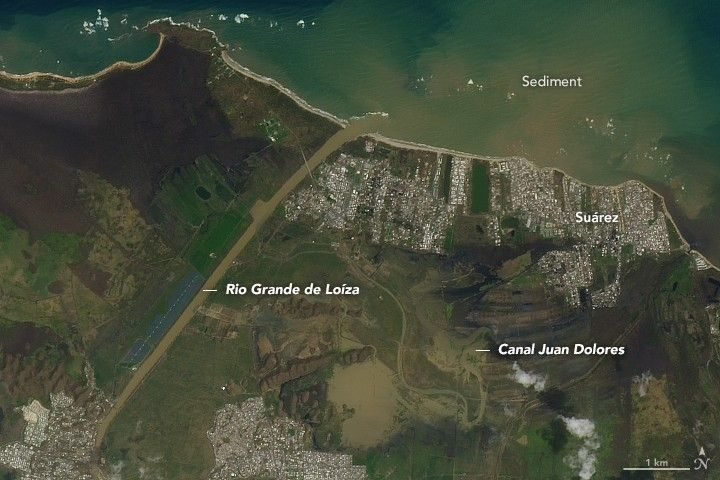
What a compound disaster technically is. The National Academies of Sciences in the United States define it as a combination of events that occur at the same time and produce impacts that exceed the sum of the individual events that caused them.
They also describe a cascading disaster: one that starts with a triggering event followed by a chain of consequences, where the combined impact over time — damage, losses, disruption — is more severe than if the events had occurred separately. The example they cite is the 2017 Thomas Fire in California, followed by mudslides that killed more people than the fire itself.
When several emergencies coincide, the general priority order applied by emergency agencies is: protect life first, then health, then property. In practice:
Recovering from a compound crisis has a difficulty of its own: the different kinds of damage get in each other's way. You can't dry out the house without electricity, you can't repair it without materials, and the materials don't arrive because the road is still cut off. That's why order matters more than speed here.
A family plan is not a pretty document: it is a handful of agreements made today, while everyone is calm, so you do not have to decide with your heart racing and no signal on your phone. It takes one conversation over the table and fits on a sheet of paper stuck to the refrigerator.
This is the section that decides who has a hard time and who has a dangerously hard time. An emergency does not suspend diabetes, high blood pressure, pregnancy, or dependence on an oxygen concentrator: what gets cut off is access to the pharmacy, the clinic, and electricity. Everything that follows needs to be prepared beforehand, because once the emergency hits, there is no more room.
After a flood many homes and shops need mud removed, drying and disinfecting before they can be used again. It is physical work with demand concentrated in the following weeks.
Taking debris, ruined furniture and damaged appliances to the collection point set by the city, or moving belongings somewhere dry, is one of the first needs and one few can meet without a vehicle.
When many households are left without a kitchen, without gas or without time, affordable ready meals become a basic neighbourhood service.
Older, ill or car-less people need someone to bring medicine, groceries and water. Charged per trip or per hour.
After ashfall it has to be removed quickly: IVHHN notes that a roof is dangerously overloaded at about 10 cm of wet ash. Demand is concentrated and the fall risk is real, so it only makes sense as a service with a harness, non-slip footwear, an N95 mask, sealed goggles and never working alone.
Volcanic ash is abrasive rock and it ruins engines. After ashfall IVHHN recommends changing oil and air filters far more often than usual, cleaning brakes and the alternator, and rinsing with water. It is a simple, high-volume service that people actively look for in the following weeks.
These are possibilities, not guarantees. Results depend on location, demand, competition, capital, skills and each person’s circumstances.
Filter the income possibilities by your situation. Results are starting points to research locally, not personalised advice. What can I do?
In a combined crisis, demand doesn't add up: it concentrates on the basics. When several things fail at once, people stop buying everything else and look only for water, food, light, warmth or cold, and communication. A business that covers two of those needs at once is worth more than two separate businesses.
It helps to start with one figure to size up what we're talking about: according to the ILO, informality affects nearly half of the employed population of Latin America and the Caribbean, around 47%, with huge differences between countries — under 30% in Uruguay and Chile, over 70% in Bolivia and Peru. For millions of families in the region, "looking for a job" and "starting something on your own" are the same sentence. What follows is not a promise of income: it is a map of what people actually do when a crisis hits, with the requirements and the risks laid out plainly.
The practical lesson from documented cases — Texas 2021, Haiti 2021 — is that in a compound crisis official services arrive later and in worse shape, because they're stretched across several fronts at once. That means the work of neighbors and small local providers isn't a nice extra: for days at a time, it's all there is.
An orientation list to complement the information on this page. This is not a shop, and nothing here is a required purchase.
No products have been selected for this section yet.
Complete PDF guide to print or carry on your phone, with official measures before, during and after, and cited sources.
Lista imprimible para armar y revisar la mochila de emergencia de la familia.
Hoja de cálculo para ver ingresos, gastos fijos y recortes posibles mes a mes.
Real, published and verifiable cases: each one links to the source where it was documented. No made-up testimonials here.
An academic study followed businesses hit by the January 2020 earthquakes and, weeks later, the COVID-19 shutdown: 121 small businesses surveyed and seven interviewed in depth (a bakery, an accounting firm, a cookie factory, a tropical fruit producer, a cosmetics business, and two pharmacies). 68% closed temporarily during the lockdown. What the ones that kept going did: reorganize the space and hours, rebuild delivery logistics, move staff from production to distribution, hire drivers to pick up goods directly from suppliers, add new products (non-perishable foods, sanitary items, protective equipment), and sustain the customer relationship through Facebook, email, and phone. The most repeated finding: 64% had backup power and 50% had a water reserve, and that is what let them keep operating.
What to learn from this: When one crisis stacks on another, what saves you is not a plan per crisis but three layers that work for all of them: <strong>physical self-sufficiency</strong> (your own power and water), <strong>a direct channel to your customers</strong> that does not depend on the location, and <strong>flexibility to change what you sell</strong> without changing your business. All three get built beforehand, not during.
Orengo-Serra & Sánchez-Jauregui, Estudios Gerenciales 37(159), 318-331 · 2021 · Coping with earthquakes and COVID-19: A perspective of customer relationship management
Two documented combined crises, each with its own chain of causes.
Related guides on this site, to put together your own combination based on what you are facing:
Download the checklist and build your family plan today. It takes under an hour and it is what changes the outcome most.
This project is kept alive by donations from our visitors. Your support lets us keep creating practical information, tools, manuals, tutorials and free resources to help people and their families prepare for, respond to and recover from different kinds of crises.
The amount shown is updated manually. We do not process payments: donations are made on the external platforms.